As Spring makes its glorious appearance, the question becomes:

When should the herd be put back on pasture?
That fresh grass in early Spring is high in moisture and high in nutrient/protein. Too much all at once on a belly that’s been digesting dry hay for the winter, and that could lead to extremely running poop and/or bloat.
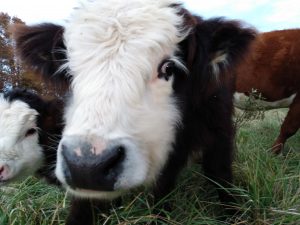
The other problem that arises is the softening (from frozen all winter to wet with Spring rains) soil is all too easily turned into a mud pit if the grass is still too short. Turning the pasture into a mud pit hurts the grasses root systems and will hinder its growth later in the year. Finding a happy medium isn’t easy, but that is the goal.
When it is time to take the cattle off of their winter paddock, the first step we always cross off is making sure the cattle have a full breakfast before doing anything. We feed them, then wait until they are finished to walk the fence lines and check for any damages that need fixed after the winter winds. If we do not wait for them to finish eating before walking the fence lines, they will just stop eating and ignore the hay while focusing on us.
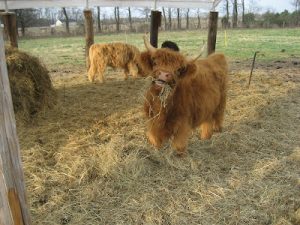
We want their stomachs full of fibrous hay. If they are already full, they are less likely to over indulge on the young grass. It’s the same concept as waiting until you finish your meal to have dessert.
We usually aim for the grass to be between six to eight inches. That is short enough to keep them from overeating, but long enough to give the soil some strength and prevent it from becoming damaged to the point of being a mud pit.
That brings me to the next point, the size of the paddock. We make the early spring paddocks double to triple the size of their normal, summer paddocks. Again, the grass is only six to eight inches tall, and this gives them enough space to not over trample the ground.
Until the grass transitions from the high water/high nutrient and protein content of Spring to the more fibrous of summer AND until the cattle have clearly become accustomed to grass again (which can be deciphered from their poop looking runny to going back to normal looking poop) we continue providing hay in their diet. You can definitely scale back the amount from what you were feeding in winter, that’s for sure. Otherwise, you’ll have wasted hay.
However, that dense, dry matter of the hay will help balance their stomachs while they adjust and digest the Spring greens.