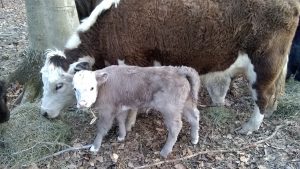
Calves are an adorable addition to a farm.
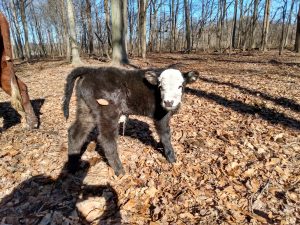
Keeping track of their birth days and appearance is important to remember ages when the time comes to sell them and, also, to be able to show a potential buyer their lineage. Also, you don’t want to accidentally get confused about who’s who as we recently did.
Our first mistake was not keeping track of the bulls on our farm so that we ended up with four bulls that were older than we’d originally assumed. We thought only one was old enough to go into the butcher, turns out four were.
While it was too late to add the remaining three bulls onto the butcher’s schedule, we did decide to go ahead and sell the three younger ones. However, two of those three bulls looked almost identical and we couldn’t tell which bull was which. Luckily, I’d kept a record.
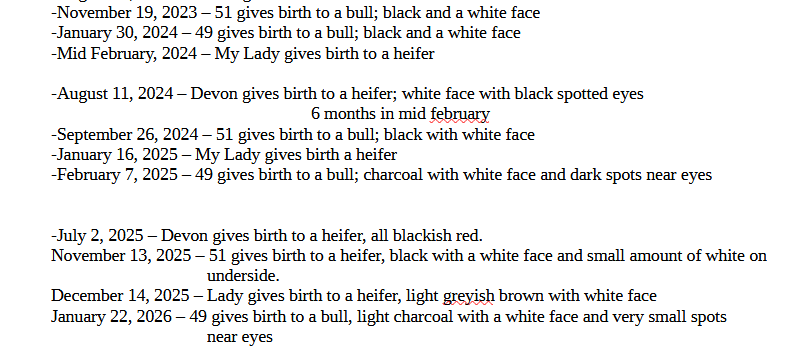
An animal log can be as simple as a word document that lists the date of birth, the cow the calf was born to, and a brief description. Like so:
Or you can make a spreadsheet:
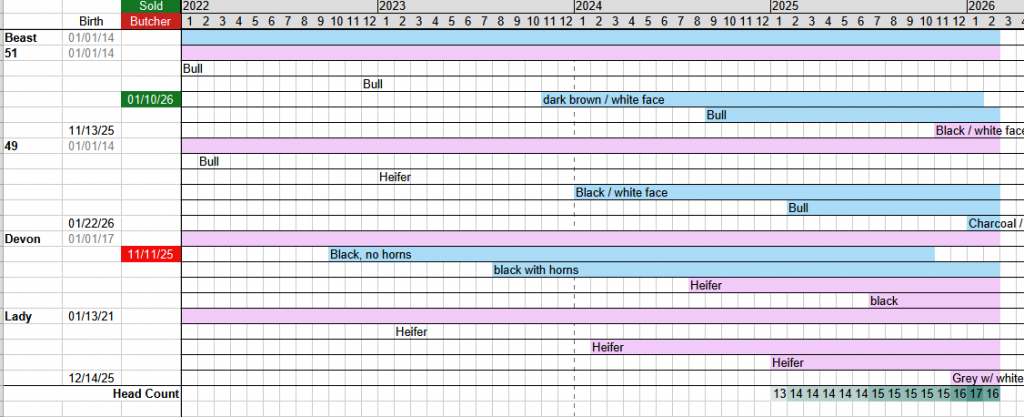
It all amounts to whatever works best for you and what will be easiest for you to use when you add or update your log. It also helps to take pictures of the calves when they’re born. A great example of how that helps is with the calves we got mixed up with.
The two bulls were born about a month apart. Skip ahead two years, and we could not tell which one was the older since they both looked so similar.
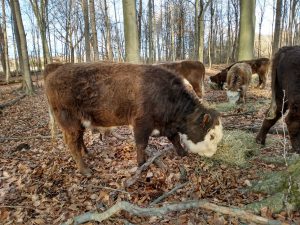
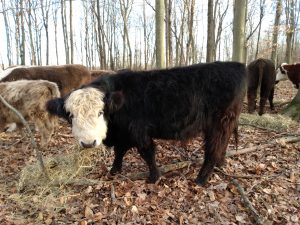
The original notes said that only one had black spots on its eyes, when it turns out both did. I am willfully admitting that I was lazy and didn’t mention the black spots near the eyes. My bad.
However, because we take pictures of calves shortly after birth, we were able to compare them and find out which one was the older calf.
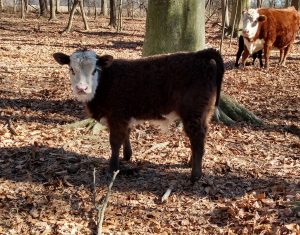
These pictures were taken the same day and, as you can see by the second photo, the older bull is the one with the larger spots on its eyes.
So, keeping a log and taking pictures helps to keep track of everyone and saves you from dealing with a lot of confusion later on.